Thoughtful guidance for choosing Montessori toys that encourage purposeful play, growing independence and hands-on learning.
Explore Montessori toys for babies, toddlers and growing children by age, developmental skill, toy type and play style. From stacking toys and puzzles to Practical Life activities and sensory play, The Little Montessori helps make it easier to understand what different toys offer and who they may suit.
Children’s abilities, interests and ways of playing change quickly during the early years.
Age can provide a useful starting point when choosing a Montessori toy, although every child develops differently. Our age guides help you narrow the options based on the kinds of movements, challenges and activities children may be ready to explore.
Explore simple toys for early sensory exploration, grasping, visual tracking, movement and cause-and-effect play.
Discover Montessori-aligned toys and materials suited to early visual, tactile and movement experiences.
Explore toys for babies beginning to grasp, reach, transfer objects and become more active in their surroundings.
Find activities for developing movement, object exploration, coordination and early problem-solving.
Explore Montessori toys for movement, coordination, cause and effect, posting, stacking and growing independence.
Discover activities suited to increasingly purposeful movement, matching, carrying, fitting and early Practical Life play.
Explore purposeful toys for active hands, movement, sorting, stacking, puzzles and everyday practical activities.
Discover Montessori learning toys for fine motor practice, matching, early language, puzzles and Practical Life activities.
Find more involved activities that encourage concentration, coordination, problem-solving and independent exploration.
Explore Montessori toys for early maths, language, matching, fine motor skills and practical activities.
Discover activities for increasingly complex problem-solving, coordination, concentration and independent work.
Explore Montessori-aligned toys for children ready for more challenging puzzles, building, practical activities and early learning.
Different types of toys give children different ways to practise, repeat and discover.
Browse by activity to find Montessori play toys that match the way your child currently enjoys exploring.
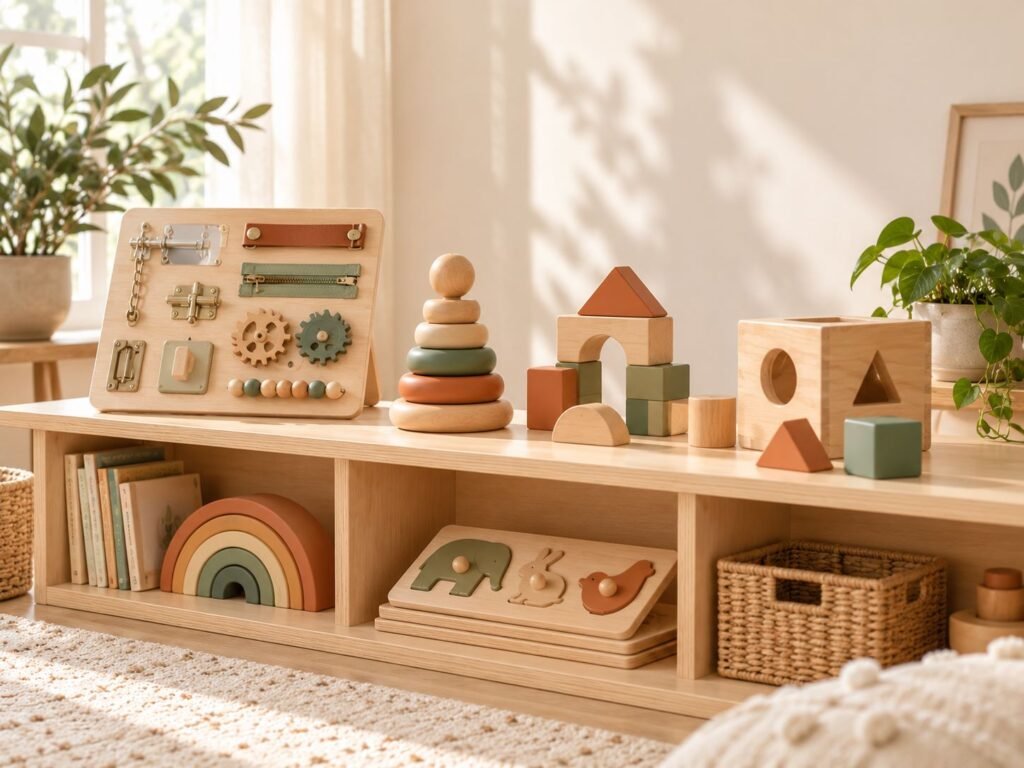
Hands-on activities involving fasteners, switches, latches and similar movements that can encourage coordination and fine motor practice.
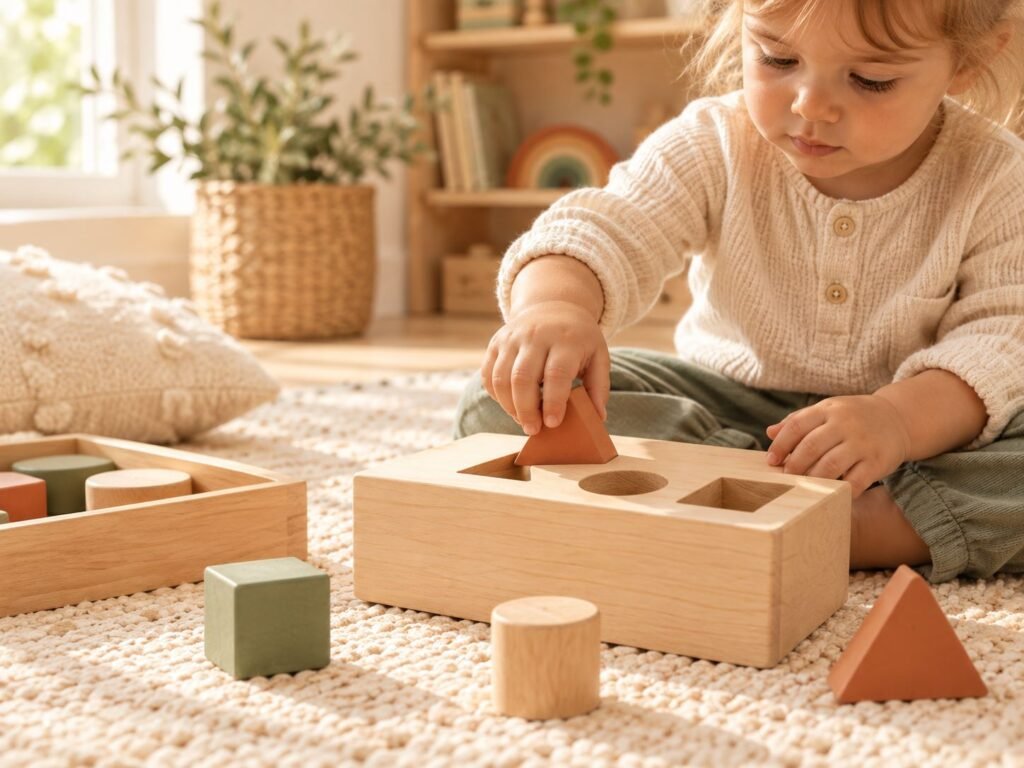
Purposeful puzzles for matching, spatial awareness, visual discrimination, concentration and problem-solving.
Stackers invite repeated practice with coordination, size, balance and controlled movement.
Open-ended building materials give children opportunities to experiment with balance, shape, construction and problem-solving.
Movement equipment can provide opportunities for gross motor activity, coordination and physical exploration.
Explore toys and materials that invite children to investigate texture, shape, movement, sound and other sensory qualities.
Discover simple musical activities that allow children to experiment with rhythm, sound and cause and effect.
Find toys and activities for movement, exploration and purposeful play outside.
Age is not the only useful way to choose an activity.
Some parents may be looking for toys connected with something their child already enjoys practising. Our skill-based guides organise Montessori teaching toys and learning materials around the activity itself.
Explore toys involving grasping, placing, threading, turning, fitting and other controlled hand movements.
Discover purposeful materials for exploring texture, shape, movement, sound and other sensory experiences.
Explore activities involving visual discrimination, categorisation, matching and concentration.
Find hands-on activities involving quantities, sequencing, counting and early mathematical concepts.
There is no single official consumer product category called a “Montessori toy”.
Traditional Montessori materials were developed for particular educational purposes. Many modern children’s toys described as Montessori are more accurately considered Montessori-inspired or Montessori-aligned.
These toys often share characteristics associated with Montessori-style play, including:
The best Montessori educational toys do not necessarily need to be complicated. A simple activity that gives a child something meaningful to practise can offer plenty to explore.
Wood is also common in Montessori environments, but a toy does not become Montessori simply because it is wooden.
Lorem ipsum dolor sit amet, consectetur adipiscing elit, sed do eiusmod tempor incididunt ut labore et dolore magna aliqua.
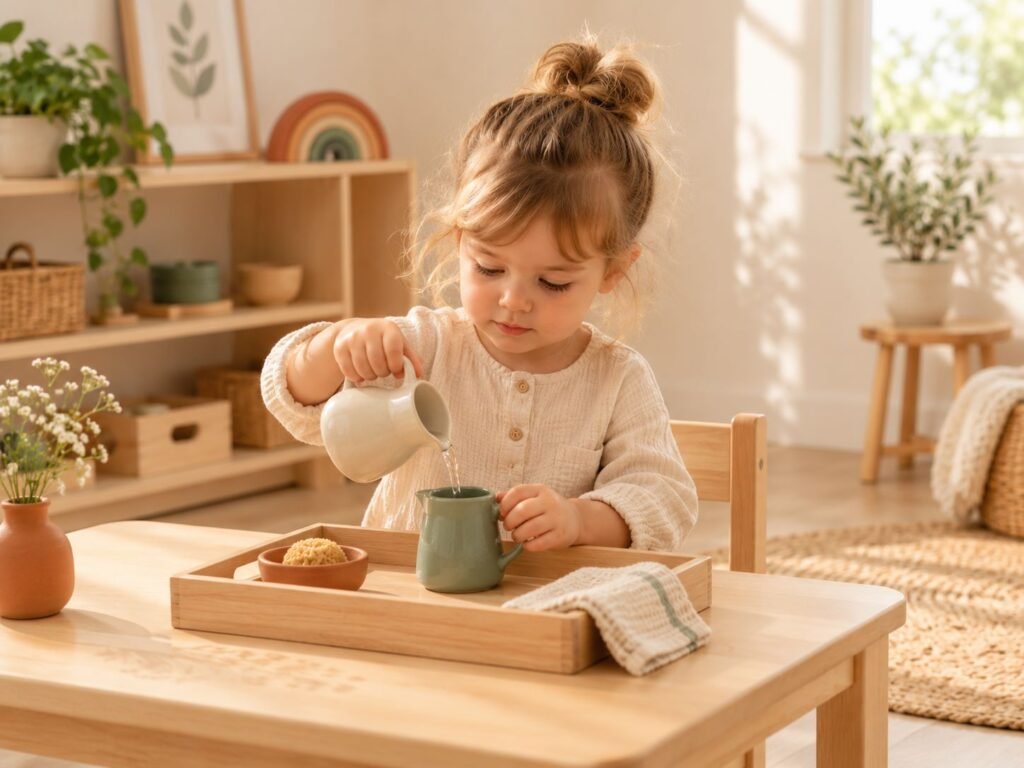
Practical Life is an important part of the Montessori approach.
These activities are based around everyday actions children see happening around them and may want to practise themselves.
Montessori Practical Life toys can involve activities such as:
These simple activities can give children opportunities to practise coordination, concentration and increasing independence.
Parents looking specifically for younger children can also explore Practical Life toys for toddlers.
Wooden Montessori toys are popular because wood can provide natural texture, weight and durability.
But material alone is not enough.
When considering a wooden toy, it is still useful to ask:
A simple wooden toy with a clear purpose may be more useful than a complicated product covered in Montessori marketing.
There are now thousands of toys marketed using the Montessori name, which can make choosing one surprisingly difficult.
A useful starting point is to consider the child before the product.
Think about:
The goal does not need to be finding the most advanced Montessori toy.
Often, the better choice is the one that fits what the child is ready to explore now.
The Little Montessori is built around helping parents understand products rather than simply presenting long lists of things to buy.
As our recommendations grow, we consider factors such as:
We also aim to distinguish genuine hands-on experience from research based on product specifications and other reliable sources.
We do not imply that we personally tested a product when we did not.
Sometimes it is easier to start with how and where a toy will be used.
Portable activities can help give children something purposeful to work with away from home without requiring a large play setup.
Explore Montessori Travel Toys
Simple water-based activities can introduce pouring, transferring, floating and other forms of hands-on exploration.
Pretend play materials can give children opportunities to recreate familiar experiences and everyday activities.
How toys are presented can influence how easily children can see, choose and return their activities.
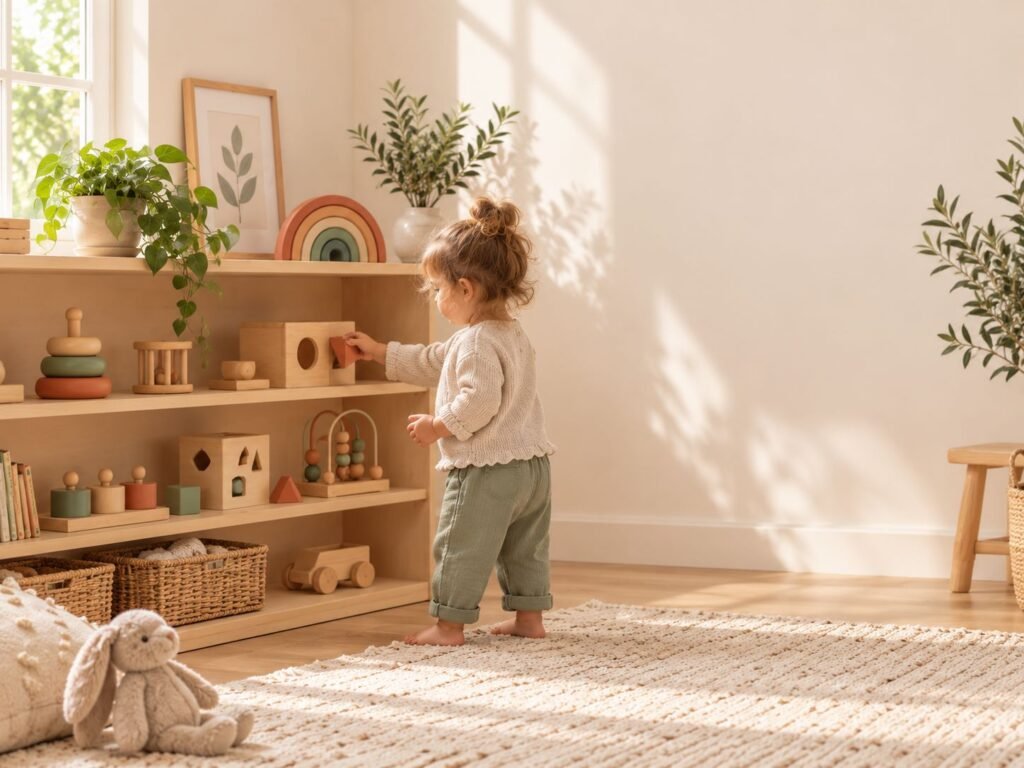
Low shelves can make a smaller selection of materials more visible and accessible while also supporting toy rotation and organisation.
Explore low, accessible shelving options designed for displaying toys and activities clearly.
Explore Montessori Toy Shelves
Find ideas and options for keeping toys organised while making it easier to maintain a manageable play space.
Montessori toys can also make thoughtful gifts when the activity suits the child’s stage rather than being chosen simply because it looks educational.
Explore gift ideas for movement, early coordination, cause and effect and independent exploration.
Montessori Gifts for 1 Year Olds
Discover purposeful gifts for toddlers interested in fine motor activities, matching, Practical Life and early problem-solving.
Montessori Gifts for 2 Year Olds
Find gift ideas for increasingly complex puzzles, early maths, language, matching and hands-on activities.
Our Blog covers questions that need more explanation than a product or category guide can provide.
Topics may include Montessori principles, choosing toys, ages and stages, toy rotation, materials, comparisons and practical ways to approach play at home.
Supporting articles will be added as The Little Montessori grows, with relevant guides linked throughout the site rather than creating unnecessary pages simply to target keyword variations.
Our blog covers questions that need more explanation than a product or category guide can provide.
Topics may include Montessori principles, choosing toys, ages and stages, toy rotation, materials, comparisons and practical ways to approach play at home.
Supporting articles will be added as The Little Montessori grows, with relevant guides linked throughout the site rather than creating unnecessary pages simply to target keyword variations.
Montessori toys generally refer to simple, hands-on toys or learning materials that encourage children to explore, practise and solve problems through active participation. Many are designed around a clear activity and allow the child to repeat it independently as their understanding develops.
Many Montessori educational toys give children opportunities to practise activities involving fine motor control, coordination, matching, sensory exploration, early maths, language and problem-solving. A toy does not guarantee a particular developmental outcome, and its usefulness depends on the individual child and how the activity is used.
No. Wood is commonly associated with Montessori environments because it is natural, tactile and durable, but the material itself does not determine whether a toy is Montessori-aligned. The design, purpose and way the child interacts with the activity matter more.
Montessori-aligned toys and activities can be introduced during infancy and continue through childhood. Choosing an appropriate activity depends on the child’s current abilities and interests as well as manufacturer age and safety guidance.
Consider what your child currently enjoys doing and what they are ready to practise. Look for an activity with a clear purpose, an appropriate level of challenge and opportunities for hands-on participation and repetition.
There is no required number. Some families prefer offering a smaller selection of accessible toys and rotating them as their child’s interests change. Having fewer available activities can also make it easier for children to see and choose what they want to use.