Three is an interesting transition point. A child may still love the repetition and whole-body movement of toddler play while becoming capable of longer building projects, more deliberate puzzles, early classification, detailed pretend play, drawing, cutting, counting, and Practical Life tasks with several steps.
The best Montessori toys for 3 year olds give that growing independence somewhere useful to go. They do not need to look academic or combine several learning features. A construction set, puzzle, art material, sorting activity, functional tool, or musical instrument can offer plenty of challenge when the child remains responsible for making something happen.
Manufacturer age guidance should still come first. Within that boundary, the strongest choice usually reflects what the child is already trying to master rather than what looks most advanced on the box.
Three-year-olds can often sustain an activity for longer when it genuinely interests them. They may also begin making plans before acting: choosing particular blocks for a structure, deciding where puzzle pieces belong, gathering props for pretend play, or repeating a drawing movement intentionally.
Current Montessori-oriented competitors reflect this wider range rather than limiting age three to traditional shelf materials. Building, art, number work, logic, imaginative play, Practical Life, and active outdoor experiences all appear prominently across the pages we reviewed.
That breadth is useful. A three-year-old does not need to spend most of their playtime completing tabletop activities for their environment to be Montessori-aligned.
At three, preferences can become much easier to see.
One child may repeatedly build. Another may draw throughout the day. Some want to sort, count, or match everything they see. Others are most interested in animals, vehicles, cooking, sweeping, music, climbing, or acting out familiar routines.
Those repeated choices can be more useful than buying from a generic list of “skills a three-year-old should learn.”
If a child keeps building, increase the possibilities for construction. If they are constantly helping in the kitchen, Practical Life may add more value than another puzzle. If they are drawing every day, accessible art materials may deserve more space than a new electronic learning toy.
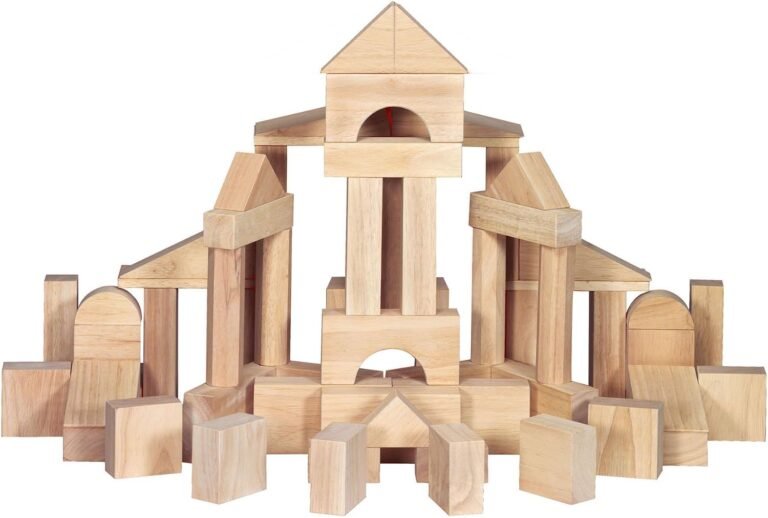
Construction often becomes more intentional around three.
Blocks may turn into roads, houses, bridges, towers, garages, animal enclosures, or environments for figures. A child may begin rebuilding after a collapse instead of simply knocking everything down and moving on.
This makes simple building materials capable of supporting considerable complexity without changing the basic toy.
Before choosing a set, consider piece size, quantity, weight, durability, compatibility with toys already owned, and where the pieces will live. Large collections offer more possibilities but also create more cleanup and storage.
Our guide to Montessori building toys compares construction options in more detail.
Many three-year-olds are ready for puzzles that require more visual discrimination than early toddler boards.
That might mean several similar shapes, pieces that need to be rotated, simple jigsaws, or puzzles based on animals, vehicles, nature, geography, or familiar scenes.
Piece count alone is not a reliable measure of difficulty. A six-piece puzzle with similar-looking parts can be harder than one with more pieces that have obvious visual cues.
Look for a challenge the child understands but cannot complete instantly. Our broader Montessori puzzles guide covers the factors that make one design easier or harder than another.
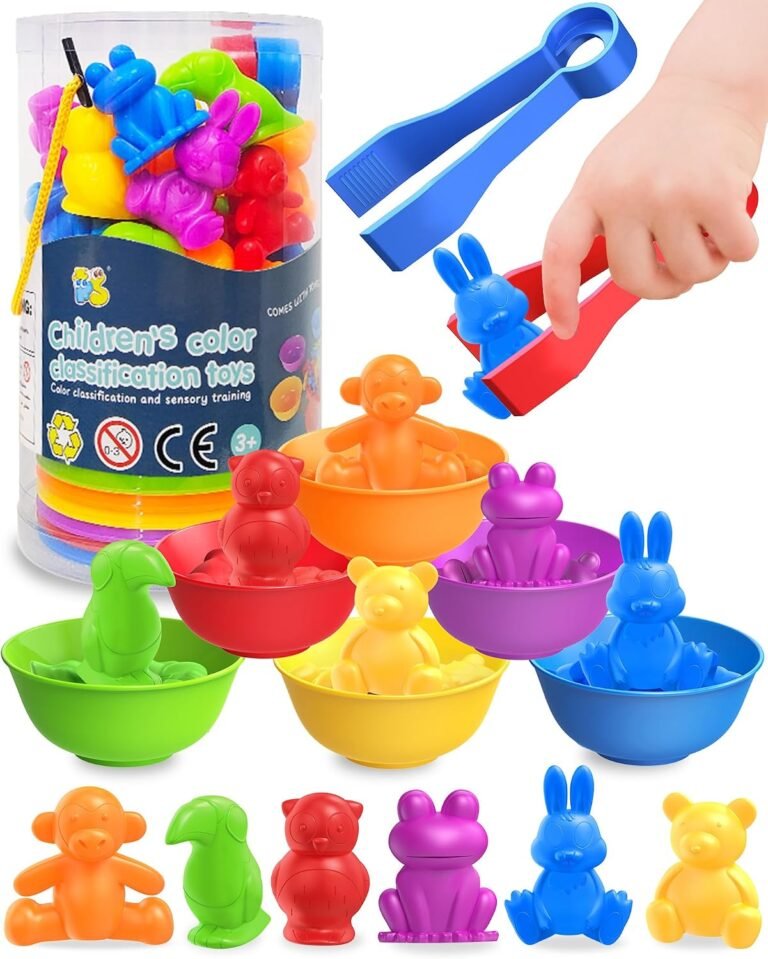
At three, children may begin grouping objects according to clearer rules.
A simple activity might involve matching identical objects or separating two colors. More involved versions may ask the child to compare size, shape, category, pattern, or another visible relationship.
It is usually easier to understand an activity when one relationship is being explored at a time.
A product that combines color sorting, counting, letter recognition, shape matching, and memory into one box may advertise more educational value without providing a clearer task.
For children who enjoy organizing and comparing, explore our guide to Montessori sorting and matching toys.
Art deserves more attention at age three than many toy lists give it.
Drawing, painting, modeling, tearing, gluing, stamping, and age-appropriate cutting all give the child something real to manipulate and create. The result does not need to resemble an adult-designed craft.
Simple access can matter more than having a large art kit. A small selection of paper and usable drawing tools that the child can reach may encourage more independent use than a complex set that needs an adult to unpack every time.
Consider washability, tool size, storage, replacement supplies, work-surface protection, and manufacturer age guidance for individual materials.
Some three-year-olds become intensely interested in numbers, quantities, patterns, or order.
Concrete activities can make more sense than jumping directly to worksheets or abstract arithmetic. Children may count objects, compare groups, arrange items by size, match a quantity to a numeral, copy a pattern, or notice relationships while building.
Traditional Montessori math materials follow deliberate sequences, so not every wooden number toy should be presented as a Montessori material.
Our Montessori math toys page looks instead at what mathematical idea the child can actually manipulate.
Three-year-olds often want to participate rather than merely watch adults work.
They may be able to help prepare food, wipe a table, sweep, water plants, transfer ingredients, set out utensils, fold simple cloths, wash produce, or put belongings away.
These activities can offer an especially clear connection between effort and outcome because the work is real.
A child-sized tool should function properly. A tiny broom that cannot sweep or a decorative pitcher that pours badly may create more frustration than independence.
For suitable tools and activity ideas, our guide to Montessori Practical Life toys looks more closely at what makes these materials useful.
Fine motor play can expand considerably around three.
Threading, lacing, drawing, using tongs, placing pegs, connecting construction pieces, manipulating larger fasteners, modeling material, and supervised cutting may all be relevant depending on the child and the exact product.
The movement itself should determine the challenge.
A busy board containing zippers, locks, buckles, laces, switches, and gears may appear comprehensive, but those mechanisms require different levels of control.
A more focused activity can make repetition easier. Our Montessori fine motor toys guide compares options by the hand movements they actually require.
Pretend play often grows rapidly around this age.
A child may create a shop, home, restaurant, construction site, farm, doctor’s office, or imaginary landscape and maintain the idea for much longer than they did as a toddler.
Simple materials can be surprisingly flexible. Blocks, dolls, realistic figures, vehicles, fabric, baskets, and familiar household props can move between many different play scenarios.
Large themed sets can still be worthwhile, but consider how much storage they require, how many accessories are genuinely useful, and whether the toy leaves room for the child’s ideas.
Our guide to Montessori pretend play toys explores those trade-offs in more detail.
Small collections of animals, people, vehicles, or familiar objects can work across several activities.
A child may name them, group them, match them with pictures, use them in storytelling, add them to block structures, or compare visible characteristics.
The key word is small. A coherent set is often easier to organize and use than a large container filled with unrelated miniature pieces.
Check manufacturer age guidance carefully because figure size and detachable components can vary significantly between products.
A product does not need one predetermined solution to be Montessori-aligned in a home setting.
Blocks, art materials, modeling material, realistic figures, play silks, and other flexible materials can give the child control over what happens.
At three, this can be particularly useful because imagination, construction, and problem-solving often begin overlapping.
The practical question is whether the material stays understandable and manageable. An open-ended toy with hundreds of small pieces can create more frustration and storage than useful possibility.
Simple instruments give children direct control over the sound they create.
A drum responds to striking. A shaker responds to movement. Different parts of an instrument may create different tones.
A three-year-old may begin repeating rhythms or intentionally changing volume rather than simply experimenting with noise.
When comparing instruments, consider sound level, size, grip, durability, tuning where relevant, and storage. More options are covered in our Montessori music toys guide.
Sensory play at three does not need to mean surrounding the child with more stimulation.
Children may compare textures, distinguish sounds, notice differences in weight, work with modeling materials, pour water, explore resistance, or match objects according to a sensory property.
A focused comparison can offer more clarity than a toy filled with flashing lights, music, buttons, and textured surfaces.
If this is a strong interest, our guide to Montessori sensory toys covers tactile, auditory, visual, weight, movement, and multisensory activities.
The transition into preschool does not mean children suddenly prefer seated work.
Running, climbing, balancing, riding, digging, carrying, throwing, catching, and exploring outdoors may occupy far more time than any shelf activity.
A child consistently seeking physical challenge may get more value from appropriate movement opportunities than from another fine motor toy.
Climbing products require careful consideration of footprint, stability, assembly, surrounding clearance, storage, supervision, and manufacturer guidance. Compare those larger purchases in our Montessori climbing toys guide, or explore a broader range of active play in Montessori outdoor toys.
A strong toy at home is not necessarily practical in a waiting room, restaurant, car, or airplane.
For portable three-year-old activities, look for manageable piece counts, secure storage, low noise, minimal setup, and materials that are difficult to lose.
Drawing supplies, reusable activity boards, compact matching activities, small construction sets, and contained pretend-play materials can all work when designed appropriately for travel.
For more options intended around portability, see our guide to Montessori travel toys.
A toy can support independence before the child has mastered the activity itself.
Three-year-olds may increasingly be able to choose an activity, carry it to a work area, use it, gather the pieces, and return it when finished.
Storage affects how easy that sequence becomes.
A puzzle stored intact, blocks contained in a manageable basket, or drawing supplies kept together can be easier for a child to handle than activities whose pieces are scattered across several places.
The goal is not perfect cleanup. It is making more of the process accessible.
Products for preschoolers often promise math, literacy, creativity, STEM, fine motor development, problem-solving, and school readiness simultaneously.
Those claims can make comparison harder rather than easier.
A clearer question is simply: what does the child do?
They may build, draw, sort, count, pour, match, thread, climb, balance, pretend, listen, or construct. Once that is clear, it becomes much easier to judge the difficulty and whether the toy adds something useful.
Many Montessori toys for 3 year olds are made from wood, but wood itself is not what makes a product Montessori-aligned.
Weight, durability, grip, cleaning, finish, and intended use matter more.
Plastic can be useful where low weight or washable construction matters. Metal can suit functional tools and instruments. Fabric can work particularly well for portable or imaginative materials.
Claims such as non-toxic, BPA-free, FSC-certified, sustainably sourced, or Made in USA should be supported for the exact product rather than assumed from its appearance or brand positioning.
We begin with the activity and the level of challenge.
A strong option should give a three-year-old something understandable to work on without requiring the adult to perform or correct every step. We then consider manufacturer age guidance, durability, piece size, storage, setup, cleanup, materials, footprint, portability, noise, and how independently the activity can be used and reset.
Longevity matters too, but we do not treat “grows with the child” as automatically better. A focused toy that fits the child’s current interest can be more worthwhile than a complex product purchased mainly for activities several years away.
Our Montessori toy review process explains how we separate manufacturer-supported information, research-based evaluation, practical limitations, and genuine first-hand experience.
Three is the first stage covered by our broader Montessori preschool toys hub, so the next step is not simply buying more advanced versions of everything on this page.
As the child approaches four, puzzles may involve subtler distinctions, building projects may become more planned, art tools may require finer control, and early math, language, classification, and Practical Life activities can involve longer sequences.
Those changes are explored more closely in our guide to Montessori toys for 4 year olds.
Disclosure: The Little Montessori may earn a commission from qualifying purchases made through links on this page, at no additional cost to you.