
A Montessori toy shelf should make it easy for a child to see an activity, reach it, remove it, use it, and return it without fighting the furniture.
Low height helps, but it is only part of the equation. A shelf can still be awkward if it is too deep, too crowded, too narrow for trays, or built with openings that make larger materials difficult to remove.
We compare Montessori toy shelves by usable height, depth, tray clearance, visibility, return path, room fit, storage format, and the manufacturer’s guidance for assembly and anchoring.
The most useful measurement is not always the furniture’s total height. What matters more is the height of the surfaces the child is expected to use regularly.
A low shelf can still be difficult when the upper tier requires an awkward reach, the unit is very deep, or heavy baskets have to be lifted from tight compartments. Child access depends on the full geometry of the furniture.
When comparing shelves, look at usable shelf height, depth, vertical clearance, tray weight, and how easily the child can pull an activity forward.
A shelf works well when the return step is as straightforward as the selection step.
Shelf depth is one of the most important practical measurements because it determines what actually fits.
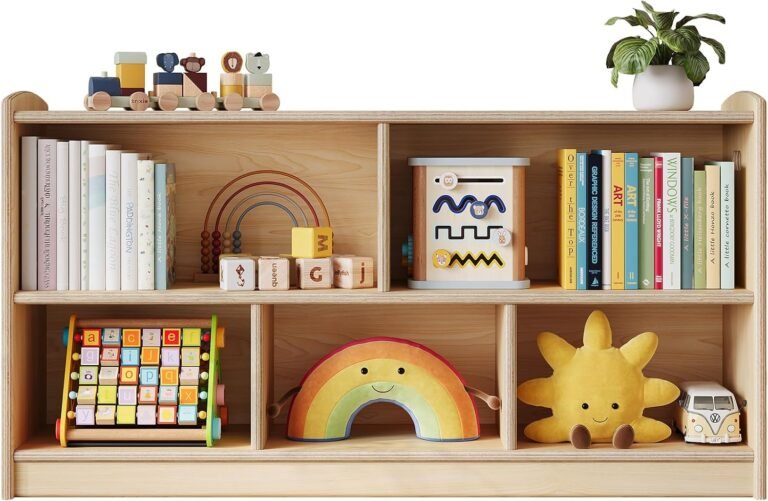
Shallower shelves may work well for puzzles, small trays, compact sorting sets, and fine-motor activities. Deeper units may suit larger baskets, bulky toys, or activity boxes, but they also use more floor space.
Before buying, measure the widest tray, deepest basket, tallest frequently displayed toy, largest puzzle board, and biggest activity box you expect to store.
Then compare those measurements with the shelf’s internal width, depth, vertical clearance, and front opening.
This is especially important with trays and baskets. A container that technically fits may still be frustrating if the handles catch, the front lip blocks removal, or the basket has to be tilted every time.
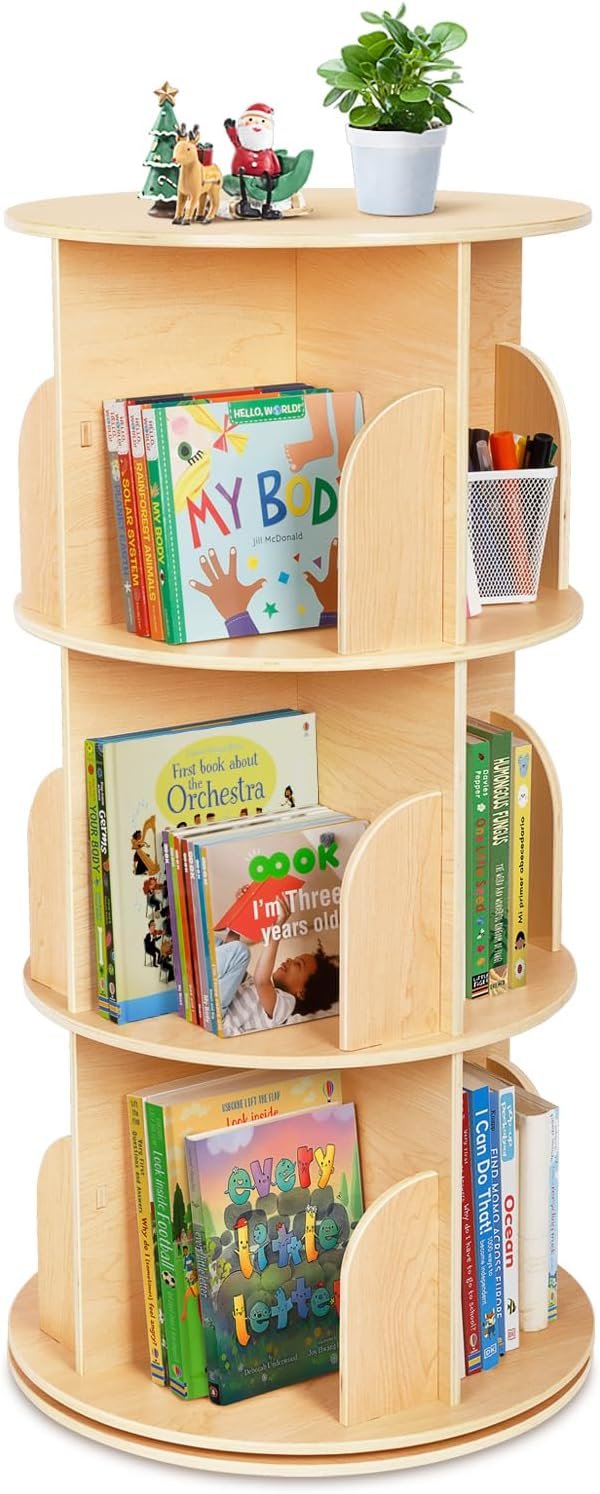
Open-back shelves can work well when the furniture is used away from the wall or as a room divider. They can make a room feel more open and may allow access from both sides.
Closed-back shelves create a stronger visual boundary and usually work more naturally against a wall. They can also help prevent objects from sliding through the back.
Neither format is more Montessori by default.
Fixed shelving offers a simple, consistent layout. Adjustable shelving can accommodate taller baskets and changing materials over time, but the useful question is whether those adjustments still keep the regular-use surfaces comfortably within reach.
Front-edge design matters too. A flat edge makes it easier to slide trays and boxes forward, while a raised lip can help contain loose items but may catch wider containers.
A Montessori-inspired toy storage shelf usually works best as presentation furniture, not as a place to hold every toy in the house.
Open shelves are useful for the activities currently available. Deeper bins, cabinets, closets, or less-accessible storage can hold out-of-rotation toys, seasonal materials, or duplicates.
This distinction helps prevent a common problem: using every inch of shelf capacity until the display becomes crowded.
Physical capacity and useful display capacity are not the same thing. A shelf may hold many toys, but the more important questions are whether each activity can be seen clearly, removed without shifting others, and returned to an obvious place.
Toy rotation does not need a rigid schedule. Materials can stay available while they are still being used and move out when they are consistently ignored, too easy, too difficult, or competing with several similar activities.
For whole-room organization beyond shelf dimensions and geometry, see our Montessori toy storage page.
Trays and baskets are part of the shelf system rather than separate accessories.
They can keep puzzle pieces, sorting materials, fine-motor tools, animal figures, art supplies, and Practical Life materials together, but the container itself needs to fit comfortably within the furniture.
A shallow tray with one activity can also make the return location clearer than a large mixed basket containing several unrelated toys.
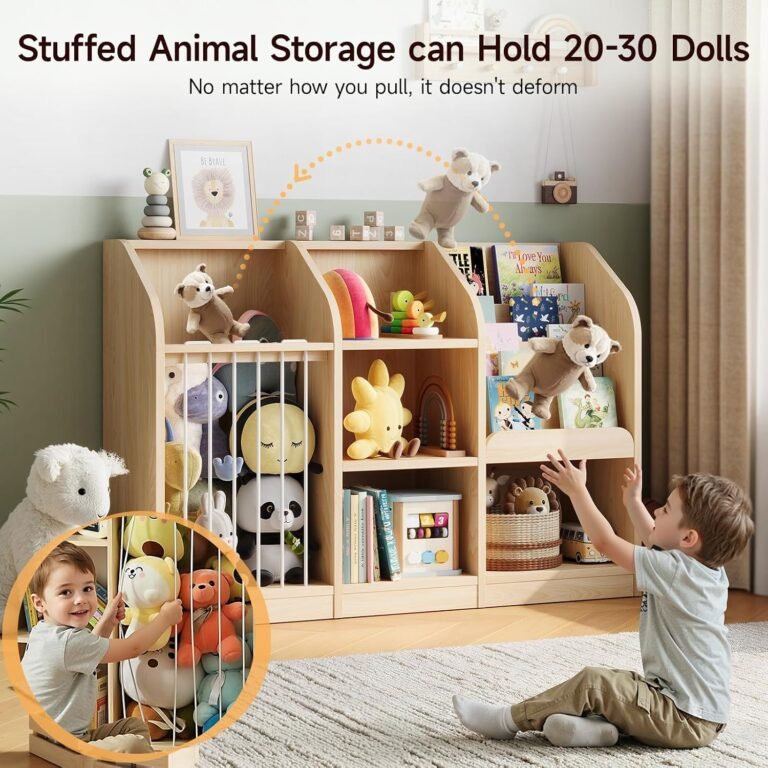
Books require a different presentation. Front-facing book storage makes covers visible and easier to browse, but usually holds fewer books than traditional spine-out shelving.
A Montessori bookshelf and toy storage combination can work well when books and toys have clearly separated zones. In smaller bedrooms or play areas, this can reduce the need for separate furniture without compromising access.
The top surface can also be useful for one larger material, a display object, or a completed construction, but it works best when treated deliberately rather than as overflow storage.
The best shelf for a large playroom may be a poor fit for an apartment or narrow bedroom.
A small-space Montessori shelf might be narrower, shallower, wall-mounted, corner-based, or combined with book storage. The challenge is reducing footprint without making the furniture too shallow for the trays and materials you actually use.
Corner shelves can recover otherwise unused space, but curved or triangular surfaces may not fit rectangular trays well.
Wall-mounted shelves save floor area but require appropriate installation height, wall construction, and mounting hardware.
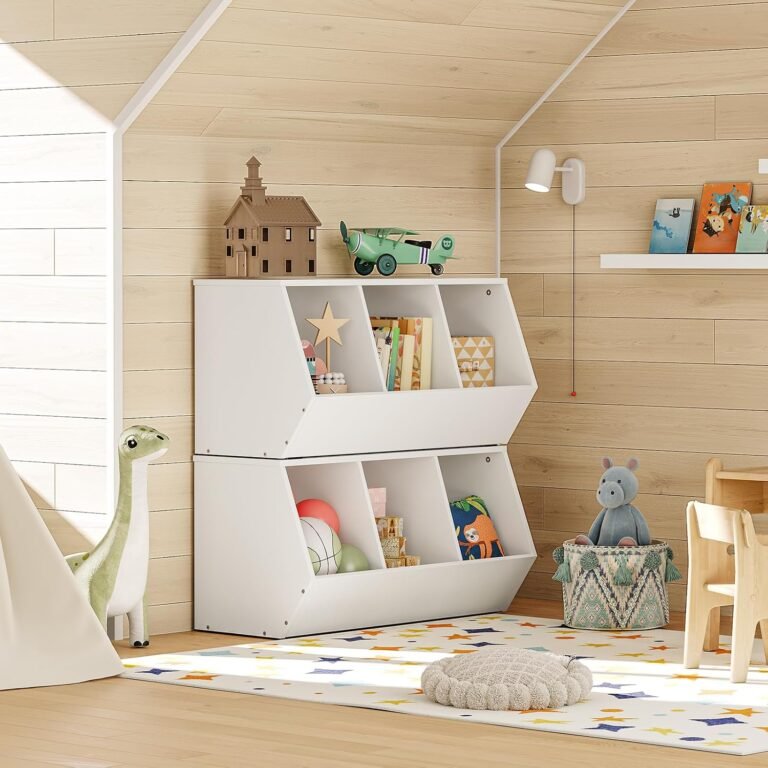
Cube storage can also work, especially for one basket or activity per compartment, but deep opaque bins behave more like general toy storage than open Montessori presentation.
For shared spaces, width and zoning become more important. Multiple children may benefit from clearer sections or more frequent rotation rather than simply filling a larger shelf with more materials.
Montessori toy shelves may be made from solid wood, plywood, engineered wood, metal, or mixed materials.
Those choices affect weight, finish, appearance, durability, and cleaning, but the furniture still succeeds or fails mainly on height, depth, clearance, visibility, and access.
Claims such as solid hardwood, birch plywood, FSC-certified wood, water-based finish, or non-toxic finish should be verified for the exact product rather than assumed from appearance.
For claim verification, see our non-toxic Montessori toys page.
Assembly can also affect the buying decision. Some shelves arrive fully assembled, while others are flat-packed or require tools and hardware. Check whether the unit can be adjusted later, disassembled for moving, or needs additional anchoring hardware.
Most importantly, a toy shelf is furniture. Low height does not guarantee that tipping is impossible.
Follow the manufacturer’s instructions for wall anchoring, freestanding use, load limits, room-divider placement, assembly, and hardware. Cleaning should also follow the care guidance for the exact finish or surface.
We focus on whether the furniture supports child access and clear presentation in real use.
A strong shelf should provide reachable regular-use surfaces, enough depth for the household’s trays and baskets, sufficient vertical clearance, clear visibility, and an easy return path.
We also consider whether an open or closed back suits the room, whether adjustable shelves add useful flexibility, how many activities can be displayed without crowding, whether book storage is integrated sensibly, and what the manufacturer requires for assembly and anchoring.
The most attractive shelf is not necessarily the most practical. A solid-wood unit can still be a poor fit if the child cannot reach comfortably or the trays do not fit.
Our Montessori toy review process explains how we compare manufacturer information, dimensions, material claims, usability, and practical tradeoffs.
Disclosure: The Little Montessori may earn a commission from qualifying purchases made through links on this page, at no additional cost to you.


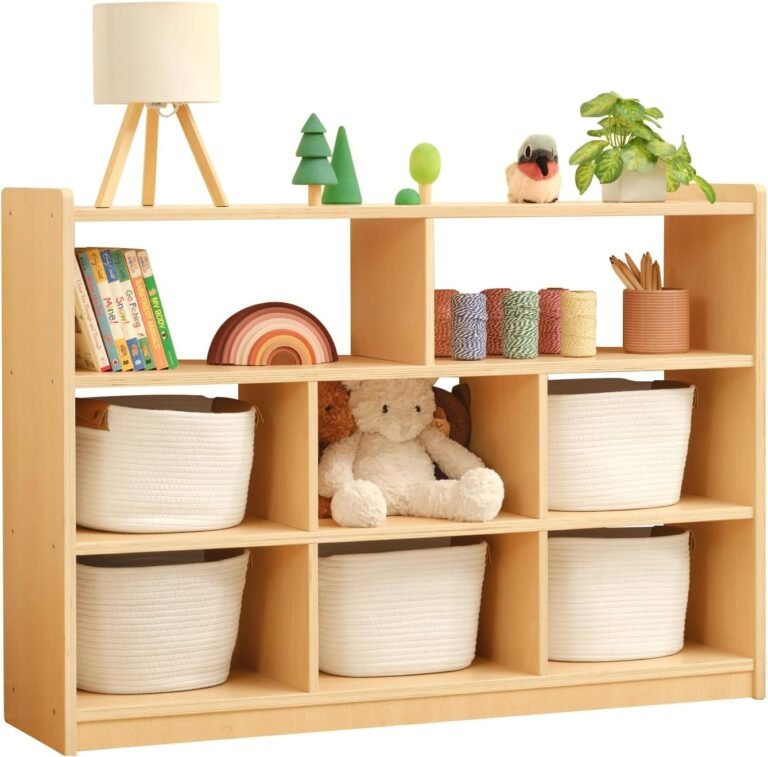


There is no single correct height. The regular-use surfaces should be low enough for the intended child to see, reach, remove, and return materials comfortably. Check actual usable shelf heights rather than relying only on total furniture height.
Either can work. Open-back shelves can provide access from both sides and work as room dividers, while closed-back shelves create a clearer visual boundary and suit against-wall placement. Room layout matters more than the style alone.
There is no universal number. Display enough activities to provide useful choice without crowding them so tightly that the child cannot see, remove, or return each one easily.
Yes. Combination furniture can work well when books have a dedicated display area, especially front-facing storage, while toys and activities remain on open shelves or trays.
Follow the exact manufacturer’s instructions. Some shelves require or recommend wall anchoring depending on their design, dimensions, placement, and intended use. Low height alone should not be treated as proof that anchoring is unnecessary.