
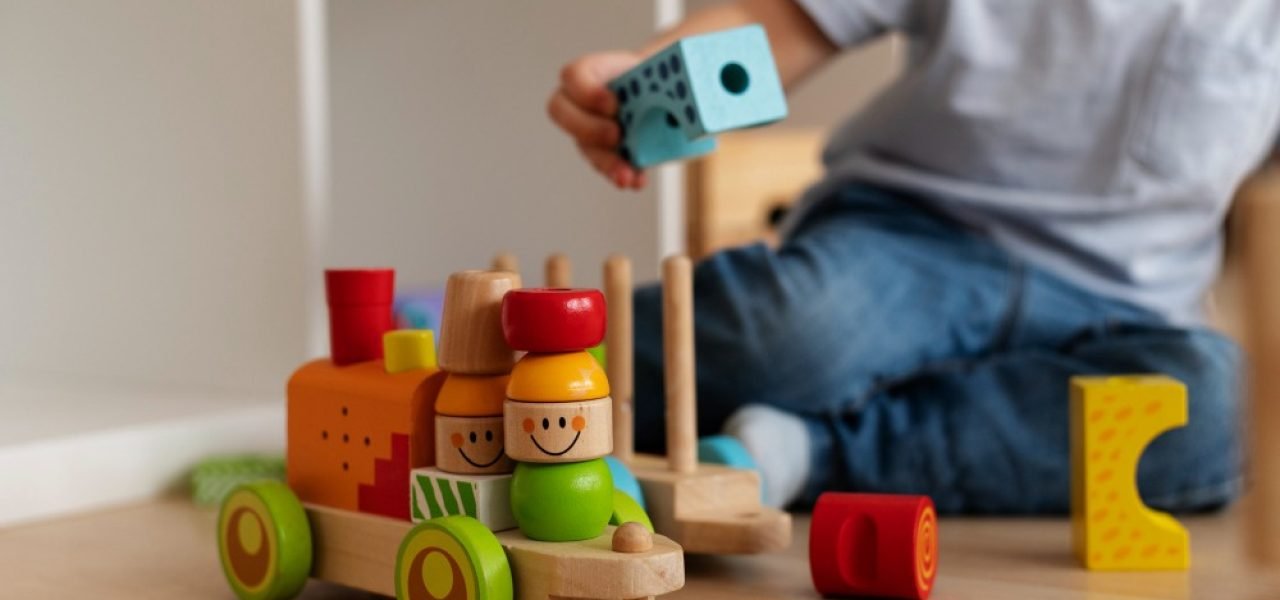
Montessori toys can work in small apartments when you consider more than the activity itself. Pay attention to noise on hard floors, pieces that roll under furniture, the space needed to use the toy, how easily it resets, and where it will be stored. Compact, contained activities with manageable parts are often easier to live with than large or highly scattered sets.
A wooden ball dropped onto hardwood sounds very different in an apartment than it does in a carpeted playroom. A set of blocks that looks compact on a shelf can occupy the entire walking path once play begins. A handful of puzzle pieces becomes much more annoying when half of them regularly disappear under the sofa.
These details rarely appear prominently on toy packaging, but they can determine how well a toy actually works in a smaller home.
Parents discussing Montessori toys on Reddit frequently raised practical frustrations that had little to do with educational value: hard pieces hitting floors, loose components spreading through rooms, toys becoming difficult to reset, and adults spending too much time collecting everything afterward.
For apartment living, the question is not simply whether an activity is Montessori-aligned. It is whether the activity fits the space in which it will actually be used.
Start With the Play Footprint, Not the Shelf Footprint
A toy can look small while stored and become surprisingly large in use.
A basket of blocks may occupy one cubby, but building requires open floor space around it. A ball toy can send pieces well beyond the area where it begins. A pull toy needs somewhere to travel. A construction set may spread across several feet once the child starts sorting pieces and building.
Before choosing something new, imagine the activity fully opened rather than neatly packed.
Consider where the child will sit or stand, where the pieces are likely to travel, and whether other people still need to walk through that area. In a compact apartment, a toy that repeatedly blocks a hallway or takes over the living room may become frustrating even if the child enjoys it.
Our guide to Montessori toy storage looks at organization more broadly, but in small homes the usable floor area deserves just as much attention as the storage container itself.
Hard Toys Can Be Much Louder Than They Look
Wood is frequently associated with Montessori-style play, but material affects the home environment as well as the appearance of the toy.
Wooden balls, blocks, puzzle pieces, stacking rings, and shape-sorter pieces can create substantial noise when they are dropped onto tile, hardwood, laminate, or other hard surfaces. Toddlers also tend to repeat interesting sounds, so an accidental bang can quickly become an experiment.
That does not mean wooden toys are unsuitable for apartments. It means the likely movement matters.
A puzzle used at a low table behaves differently from a basket of blocks repeatedly dumped onto the floor. A ring stacker stays relatively contained until the rings become rolling objects. A ball activity is designed around movement from the beginning.
If sound travels easily through your building, consider where the toy will usually be used before focusing on what it is made from.
A washable rug or padded play surface can soften routine impacts where appropriate, but it should not be used to compensate for a setup that conflicts with product instructions or safe use.
Rolling Pieces Create Their Own Kind of Clutter
Balls are obvious travelers, but they are not the only pieces that escape.
Cylinders, round puzzle knobs, wheels, beads, stacking rings, and some geometric pieces can roll or slide surprisingly far on hard floors. Furniture with low clearances makes the problem worse because pieces remain visible enough to bother everyone but difficult for a child to retrieve independently.
That changes the activity.
If every third repetition ends with a parent reaching behind a cabinet, the toy may require far more adult involvement than its simple design suggests.
When considering Montessori ball toys, look at what happens after the ball leaves the child’s hand. A contained ball run or retrieval box can behave very differently in a small room from an activity where the ball is expected to travel freely.
The same principle applies to any round component: consider its likely destination, not only its starting point.
Loose Parts Are Easier to Manage When the Set Has Clear Boundaries
Some toys create clutter because they contain many pieces. Others create clutter because those pieces have no obvious home during play.
There is a practical difference between ten pieces that remain around one activity tray and ten pieces that migrate into every corner of the room.
For construction and sorting materials, a shallow basket, tray, or clearly defined work area can make the activity easier to contain without prescribing exactly how the child must play.
The number of pieces matters too.
A large building set may offer variety, but that does not mean every component needs to be available simultaneously. Where the manufacturer permits the set to be divided, keeping a smaller working selection accessible can reduce visual clutter and make cleanup less demanding.
Our Montessori building toys guide covers the different ways construction materials can be used. In an apartment, piece count and spread deserve additional weight alongside the building possibilities.
Think About the Distance Between Play and Storage
Storage works best when returning the toy does not become another household project.
If blocks are used in the living room but stored in a bedroom closet, every cleanup requires transporting the whole set. If puzzles live on a shelf across the apartment, pieces are more likely to be left behind. Large toys that need to be carried out and assembled may remain unused simply because setup feels inconvenient.
The easiest system is often the shortest one.
A toy that can be returned to a nearby basket, low shelf, or cabinet has a better chance of being reset consistently than something whose storage location is disconnected from where the child uses it.
For homes where visible shelving makes sense, Montessori toy shelves can help define a smaller number of accessible activities. Closed storage can be equally useful for rotated materials, particularly when the room serves several purposes.
Small-space organization does not need to look like a Montessori classroom. It needs to make everyday use manageable.
Be Selective With Toys That Need a Permanent Footprint
Some toys are inconvenient to move after every play session.
Climbing structures, larger play sets, activity tables, tracks, and certain gross motor toys work best when they have a predictable place to live. In a house with a dedicated playroom, that may be straightforward. In an apartment, the same product might compete with dining space, work areas, or everyday walking routes.
Measure the in-use dimensions before buying rather than relying only on folded or packaged measurements.
Also consider whether the toy truly folds or merely becomes slightly smaller. A structure that technically collapses can still be awkward to store behind furniture or inside a closet.
Families considering Montessori climbing toys should pay particular attention to manufacturer requirements for clearance, placement, supervision, and safe use. Limited floor space is not a reason to reduce a product’s required safety area.
Sometimes a smaller activity is the better fit for the home, even when there is room to physically squeeze in the larger one.
Choose Activities That Contain Their Own Movement
Some toy designs naturally keep play within a small area.
A puzzle board gives pieces a destination. A posting activity directs objects into a container. A compact stacker keeps repeated movements close together. Certain sorting activities provide defined places for each component.
These are not inherently better toys, but they can be easier to live with in a multipurpose room.
By contrast, activities based on throwing, rolling, pulling, long tracks, sprawling construction, or large-scale movement naturally require more territory.
That distinction can help when choosing between two developmentally appropriate options. If both offer an interesting challenge, the one whose activity remains reasonably contained may fit apartment life better.
For examples of compact activities with clearer physical boundaries, see our guides to Montessori puzzles and Montessori stacking toys.
Consider What Cleanup Looks Like After Real Play
Product photographs show complete sets. Homes rarely stay that way.
Before buying, picture the toy after twenty minutes of ordinary toddler use.
Are there twelve pieces across the floor? Does every component have to be located before the activity works again? Will one missing piece make the toy unusable? Can the child return most of it independently? Is there a container that actually accommodates the pieces without arranging them perfectly?
These questions are particularly useful for learning toys Montessori products marketed around sorting, matching, construction, or multiple fine motor tasks.
A toy that requires a lengthy inventory after every play session can become tiresome quickly in a small home because there are fewer places for missing pieces to disappear without interfering with something else.
The easier a material is to gather and restore, the more realistic it is to keep accessible.
Multipurpose Rooms Need Toys That Can Make Way for Daily Life
Apartment living often means the play area is also the living room, dining area, home office, or family gathering space.
That changes what “easy to store” means.
A toy does not necessarily need to vanish from sight, but it should be possible to reclaim the room without dismantling a complicated setup every evening.
Activities that fit into one tray, basket, drawer, or shelf space can move between play and everyday life more smoothly. Toys that require a large arrangement may still be worthwhile if the child uses them heavily, but they deserve more deliberate consideration.
This is one reason fewer accessible toys can be practical in compact homes. The benefit is not adherence to a particular aesthetic. It is simply easier to see what is available, use the floor for one activity at a time, and restore the room afterward.
Do Not Confuse a Small Home With a Need for Tiny Toys
Compact does not always mean better.
Very small pieces can create their own problems, including difficult cleanup and age-related safety concerns. Manufacturer warnings and age guidance remain essential, particularly for products with small detachable components.
A larger object may sometimes be easier to manage because it stays visible, does not roll under furniture, and is easier for the child to return to its place.
A small apartment therefore does not require miniature toys. It benefits from toys whose overall use is predictable.
The relevant questions are about movement, containment, storage, setup, and safety rather than dimensions alone.
Use Ordinary Household Activities When They Fit Better
Not every useful activity needs another permanent object on the shelf.
Children may be interested in carrying laundry, wiping a surface, transferring safe household items, helping put objects away, watering a plant, or participating in age-appropriate everyday routines.
These activities can provide purposeful movement without introducing another large set of components into the home.
Our guide to Montessori Practical Life toys explores products that can support this kind of participation, but Practical Life does not require turning every household task into a specialized toy.
For families short on space, that distinction is useful. Sometimes the most apartment-friendly option is to use something already present in the home.
Let the Apartment Help Narrow the Choice
Limited space can actually make buying decisions clearer.
Instead of asking only whether a toy looks educational or matches a Montessori aesthetic, you can rule out options that would create predictable friction in your home.
A useful small-space check is straightforward: Where will the activity happen? How far can its pieces travel? How much noise will normal use create? Can the child repeat it without sending an adult under the sofa? Where does everything go afterward? Does the toy still leave the room usable for the rest of the household?
A good fit does not need to be silent, tiny, wooden, or perfectly organized.
It simply needs to earn the space it occupies.
In an apartment, practical details such as a contained play area, manageable piece count, reasonable sound, accessible storage, and an easy reset can matter just as much as the skill a toy is designed to practice.